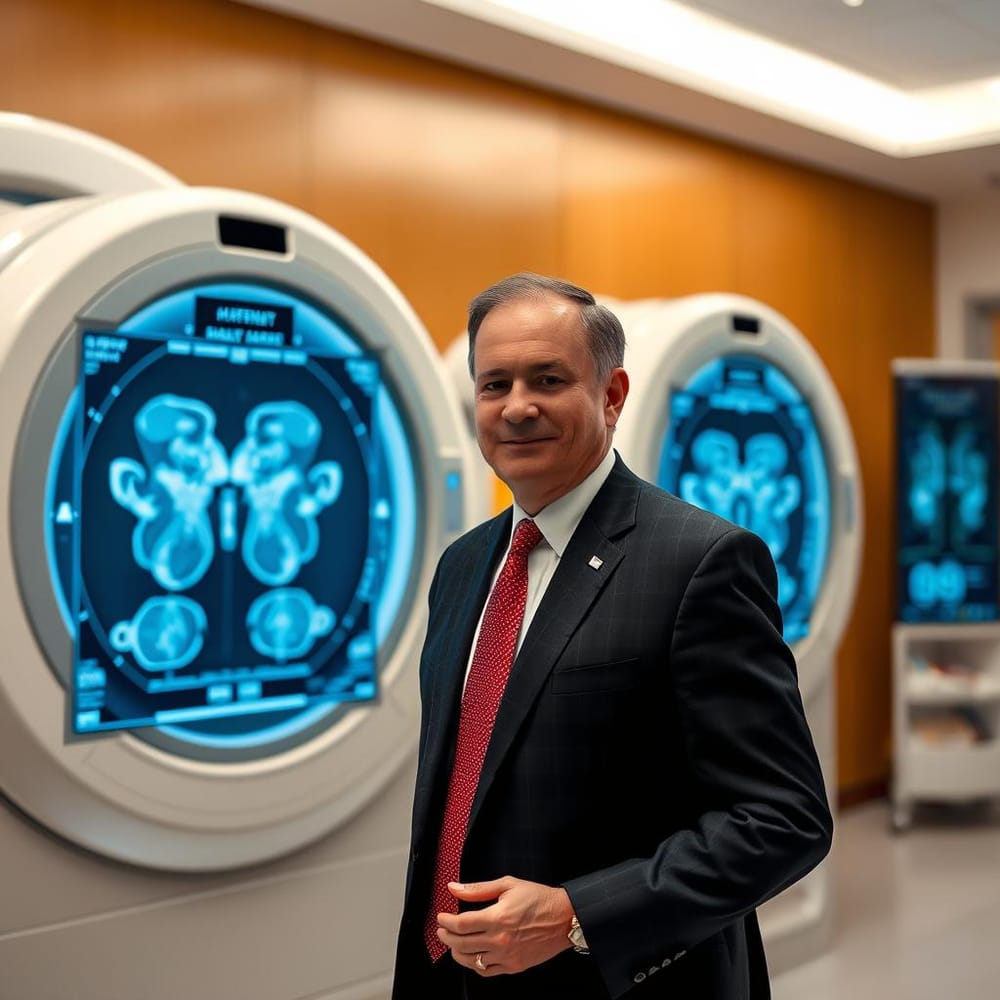
*The Future of Radiology: AI-Driven Diagnosis on the Horizon*
In a recent statement, the CEO of America's largest public hospital system, NYC Health + Hospitals, has expressed his willingness to replace radiologists with AI-driven diagnostic tools. This statement has sparked debate among healthcare professionals and experts, highlighting the rapidly evolving landscape of medical imaging and diagnostics.
The Rise of AI in Radiology
The use of artificial intelligence (AI) in radiology has been gaining momentum in recent years. AI algorithms can analyze medical images, such as X-rays and MRIs, to detect abnormalities and diagnose conditions more accurately and quickly than human radiologists. While AI is not yet ready to completely replace radiologists, it has the potential to augment their work and improve patient care.
The CEO's Statement
CEO Mike Firman's statement, made during a recent conference, sparked controversy among radiology professionals. When asked about the role of AI in radiology, Firman responded, "We're not opposed to replacing radiologists with AI if it can improve patient care and outcomes." This statement has been interpreted as a willingness to adopt AI-driven diagnostic tools at the expense of human radiologists.
Implications for Radiology Professionals
The potential replacement of radiologists with AI-driven diagnostic tools raises significant concerns for radiology professionals. Radiologists rely on their expertise and training to interpret medical images, and the loss of this expertise could lead to errors and misdiagnoses. Additionally, the adoption of AI-driven diagnostic tools could lead to job losses and changes in the way radiologists work.
The Path Forward
While Firman's statement has sparked debate, it also highlights the need for the medical community to adapt to the rapidly evolving landscape of medical imaging and diagnostics. As AI technology continues to improve, it is likely that we will see a shift towards more AI-driven diagnostic tools. However, it is essential to ensure that these tools are developed and implemented in a way that complements human expertise, rather than replacing it.
In conclusion, the CEO's statement has sparked a necessary conversation about the future of radiology and the role of AI in medical imaging and diagnostics. As the medical community continues to evolve, it is essential to prioritize patient care and outcomes while also addressing the implications for radiology professionals.